VPN and Tor at Zcash Casinos
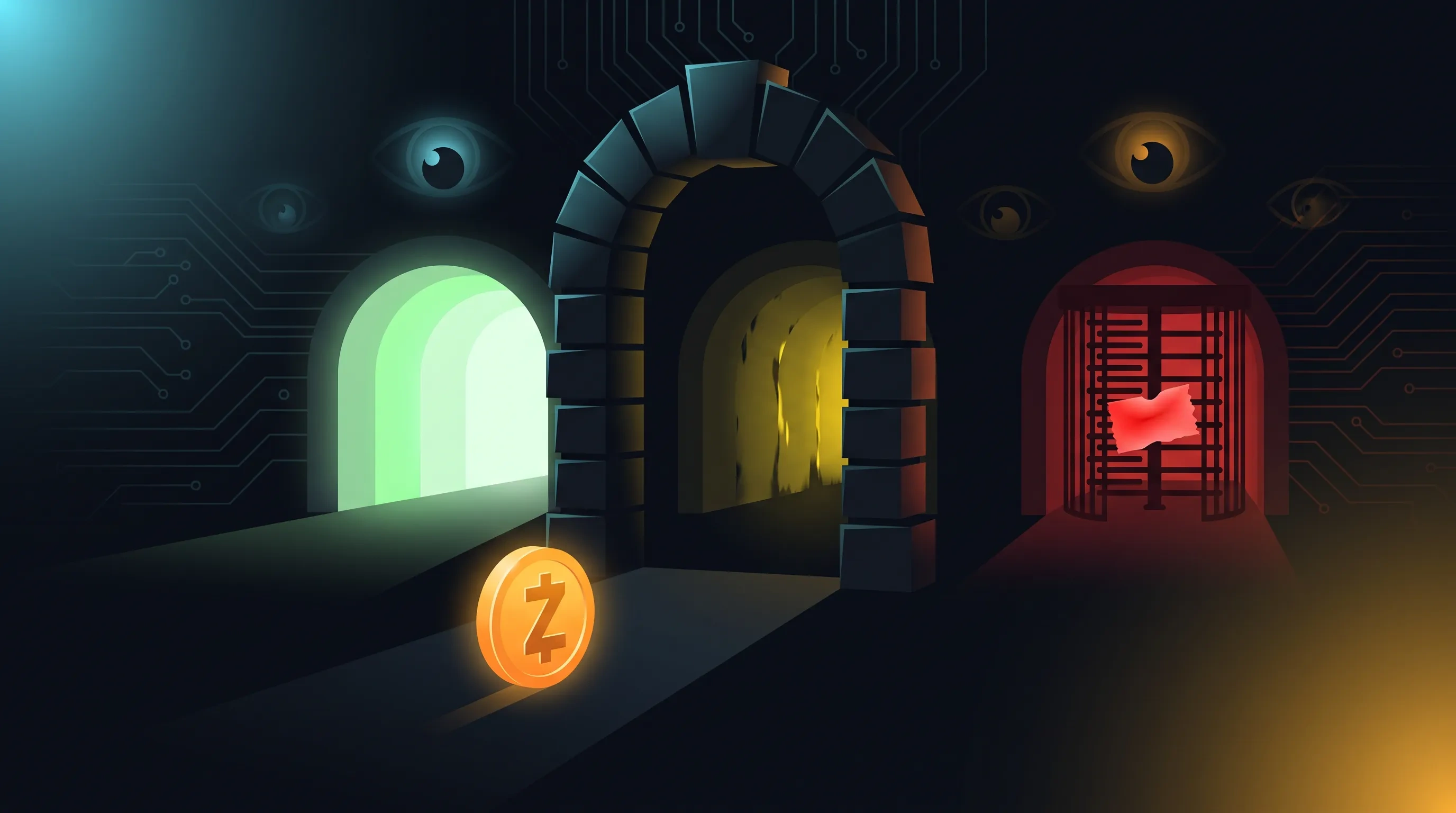
Short answer: It depends on the operator's terms: some welcome VPN users, some tolerate it silently, and some prohibit it outright - and a prohibited-VPN clause can delay or void a payout after a win. Zcash adds its own layer: shielded payment routes protect your money trail independently of your IP.
The VPN question at a crypto casino is really two questions wearing one hat: a terms question (can they punish me for it?) and a privacy question (what does it actually hide?). Zcash makes the second question far more interesting than at any other coin - this guide separates the two properly.
table of contents
The terms question: read the policy before the login
Casino VPN policies come in three flavors, and the flavor matters more than the tool:
- Friendly: terms welcome or ignore VPN use outright. Rare, but real - and the healthiest sign, because it means the operator's risk model does not start by criminalizing its customers.
- Tolerated: nothing written either way. Most common. Low day-to-day risk, but unwritten policies are unreadable at payout-review time.
- Prohibited: explicit ban on VPN, proxy or anonymized access. These clauses are not decoration - they are the ones that surface after a win, escalated from "security check" to confiscation in the documented worst cases.
Our comparison table carries the per-operator policy fact with a source and a date, because this is precisely the kind of claim that must be checked, not remembered. The general rule for risk: at a prohibited-VPN operator, you are not hiding - you are deferring a terms argument to the day you can least afford it.
The privacy question: what a VPN or Tor actually hides
A VPN moves your traffic through a server, hiding your IP from the destination [2]. Tor routes through volunteer relays with far stronger separation [1]. Both operate on the network layer - which means:
- They hide where you connect from, not what the casino's own books record: deposits, bets, payouts, session times.
- They do nothing for your payment route - a transparent ZEC deposit chain is public regardless of your IP [3].
- Their weak point is your behavior: account creation details, timezone leaks, device fingerprints and reuse patterns defeat the tunnel from the inside [2].
At a KYC-taking casino, a VPN is privacy theater: you already handed them an identity document. Where network privacy genuinely pays is at accountless ZEC-native sites - operators that never hold your name in the first place, where your IP and your payment route are the only two identifiers that exist. Tor plus an accountless site is the combination that starts with the operator holding no identity documents - the strongest practical baseline [1].
The Zcash-specific opsec baseline
Zcash lets you separate your money privacy from your network privacy - use both deliberately:
- Payment layer: shielded or unified addresses in and out wherever the operator documents shielded payouts [3]. This does more for your financial privacy than any VPN ever will - see the shielded vs transparent guide.
- Network layer: match the tool to the operator - VPN at friendly/tolerated sites, Tor for accountless ones, plain connection where a VPN ban makes it a terms liability.
- Wallet layer: a dedicated wallet for the gambling float, kept current with wallet updates [4], never exposing seeds to "support". The wallet guide covers the trap list.
- Account layer: accountless where possible; where an email is required, one that exists for nothing else.
- Behavior layer: no casino-account reuse across sites, no identifying details in chat, and an honest read of which of the previous four layers you skipped before blaming "crypto privacy" for a leak.
The people whose ZEC gambling is actually private are not the ones with the fanciest VPN subscription - they are the ones who noticed that privacy is a route with five legs, and skipped none of them.
When it all goes wrong
If an operator freezes a payout citing "VPN abuse" or "suspicious activity": demand the exact clause and the triggering event in writing, compare it against the policy fact we documented on their review page, and escalate in writing only. The scam-checklist rules apply in full - no seed sharing, no "verification deposits", ever, and the payment help tool drafts the exact escalation message for a blocked-withdrawal case.
Network-layer privacy is the easy part of this puzzle - Zcash's payment layer is the piece other coins cannot offer [3], and the operator policy facts in our reviews are the piece most players skip. Do all three and what remains is only what the operator's own logs record - the smallest surface you can build without leaving the hobby.
FAQ
Can a casino detect VPN use?
Often yes - datacenter IP ranges, timezone and language mismatches are trivial signals. Detection matters less than the policy: at a prohibited-VPN operator, an obvious VPN is a terms problem after a big win; at a friendly one it is none.
Is Tor allowed at online casinos?
Rarely as an explicit yes. The cleanest fit for Tor is accountless ZEC-native sites that never hold identity in the first place; KYC-heavy casinos treat Tor signups as fraud signals. Check our per-operator policy facts.
Does a VPN make my Zcash gambling private?
It hides your IP from the casino - nothing else. Your payment route privacy comes from address types, your device safety from standard opsec, and the casino's internal record of you from choosing an operator that collects nothing.
What happens if I win on a prohibited-VPN account?
Documented operator behavior ranges from KYC escalation to confiscation under the terms you accepted. It is a real risk with real money - the VPN policy fact in our reviews exists for exactly this question.
VPN, Tor - or neither?
Match the tool to the threat: ordinary play at a friendly operator needs neither; risk-takers at unknown operators need both; and for pure payment privacy, shielded ZEC does more than either one.
Ready to pick a casino? The comparison table has the live values, the finder narrows them down:
Sources
- Tor Project - overview of onion routing - accessed 2026-09-15
- VPN (Wikipedia) - what a VPN does and does not hide - accessed 2026-09-15
- z.cash: difference between shielded and transparent Zcash - accessed 2026-09-15
- Zcash forum: Ironwood wallet/libraries update notes (2026-08) - keeping tooling current - accessed 2026-09-15